
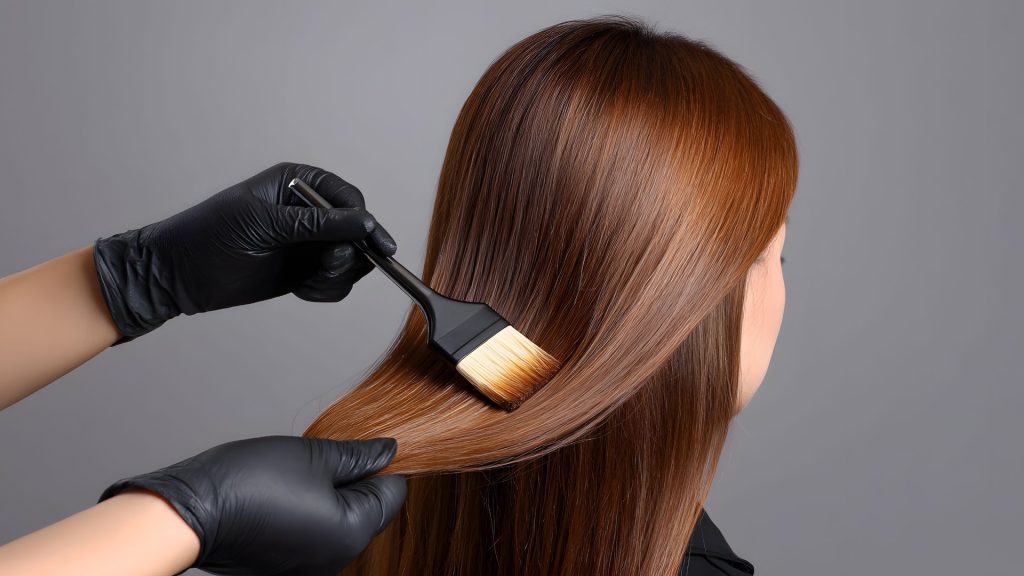
Does Hair Dye Kill Lice? Understanding What Coloring Really Does
Many parents ask does Hair Dye Kill Lice? because hair dye contains harsh chemicals such as ammonia, peroxide, and other alkaline agents, it must be strong enough to kill lice. While it’s true that these ingredients can damage the exoskeleton of some adult lice, the effect is inconsistent at best. Some lice may be weakened or stunned, others may die, but many survive completely unharmed. This inconsistency means that coloring hair cannot be trusted to fully eliminate a lice population. Lice are incredibly adaptable insects, and the adult ones often escape chemical exposure by moving quickly toward the warmest part of the scalp, where dye is least likely to reach.
Complicating matters further is the fact that modern infestations increasingly involve “super lice,” which are genetically resistant to many chemicals, both natural and synthetic. Super lice cling tightly to the hair shaft, avoid chemical penetration, and withstand products that once killed them easily. Hair dye was never formulated as a parasite-killing agent; it was designed to change hair color. So while it may appear tempting as a DIY solution, hair dye does not penetrate deep enough, evenly enough, or consistently enough to remove lice. It may kill a few live bugs, but it will never eliminate an active infestation.
Can Hair Color Kill Lice Eggs?
When addressing lice, destroying or removing the nits the eggs is far more important than killing the live bugs. Nits are the real engine of an infestation, and unfortunately, hair dye has zero effect on them. Each nit is encased in a hard, waterproof shell that protects the developing louse from moisture, chemicals, temperature changes, and even professional-grade dye components. No amount of ammonia, peroxide, or developer can breach this shell. Even if you bleach the hair, the inner embryo remains alive, protected, and ready to hatch.
The situation becomes even more misleading because dye can stain nits, making them harder to see. Parents often imagine dye “killed” them, simply because the nits change color. But the truth is that the embryo inside is completely unaffected hair dye changes the outside appearance only. Within 7–10 days, the nits hatch, and a fresh infestation begins, leading families to believe lice “returned” after treatment. In reality, they never left. Dye simply masked the eggs long enough to create false hope before the problem emerged again.
Why Hair Dye Cannot Replace Manual Removal

Even if coloring hair kills a small percentage of adult lice, nothing about hair dye replaces the need for manual removal. Lice professionals around the world agree that the only reliable and permanent solution is physically extracting lice and nits from the hair. This requires a metal, micro-grooved nit comb, bright lighting, section-by-section combing, and expert technique. Manual removal addresses the root issue because it removes the eggs that every chemical including hair dye fails to kill.
Children, teens, and adults all vary in hair texture, thickness, sensitivity, and scalp condition, which makes manual removal even more essential. Chemical processes like coloring can irritate the scalp, but they never remove eggs. The reason professional removal works is because it targets each stage of the lice life cycle not just the adults, which make up a small portion of the infestation. At Lice Care Solutions, licensed technicians eliminate every louse and every nit in a single private, in-home appointment, ending the problem immediately.
Why Hair Dye Gives a False Sense of Success

It’s extremely common for families to feel convinced hair dye “worked”—but only for a short time. This false sense of success happens because adult lice may be temporarily eliminated or slowed down. For the first few days after dyeing, the scalp may feel less itchy and lice may appear less active. However, the nits remain fully intact. As soon as they hatch, the infestation begins again, usually within a week. Parents often interpret this as lice returning, but in truth, the eggs were there the entire time, untouched by coloring.
Adding to the confusion, dye can camouflage nits by staining them to match the hair color. This makes them significantly harder to see and leads families to assume no eggs remain. Nits blending into newly colored hair can make the infestation appear “gone,” even when it’s still active. Lice that hid near the scalp during the dyeing process also emerge later and continue laying eggs. Because a single female louse can lay 8–10 eggs per day, even one surviving bug is enough to reignite a full outbreak.
Does Hair Dye Kill Lice More Than OTC Shampoos?
Many frustrated parents compare hair dye to traditional lice shampoos and wonder which is more effective. The truth is that hair dye and OTC shampoos share the same major limitation: neither one kills nits. Over-the-counter lice treatments rely on pesticides like permethrin and pyrethrin, but super lice have developed resistance to these chemicals. As a result, shampoos may kill a certain number of adult lice, but the eggs remain untouched and continue hatching.
Hair dye has similar shortcomings. It may kill a few adults, but it cannot overcome the resilience of lice eggs or the speedy nature of adult lice that evade chemical exposure. In both cases, families end up with repeated infestations, wasting time and money on treatments that only provide temporary relief. There is no chemical-based approach—dye, shampoo, or DIY—capable of replacing professional manual removal. This is why dermatologists, pediatricians, and lice specialists repeatedly recommend combing as the safest and most effective solution.
Frequently Asked Questions
Coloring hair may kill a small number of adult lice because of the chemicals in dye, but it cannot eliminate an infestation on its own. Lice hide near the scalp, where dye often doesn’t penetrate, and their eggs remain completely unaffected. Even if the adults die, the nits will hatch within days, causing the infestation to continue. This is why families who rely on dye almost always see lice “return,” when in reality, the eggs simply hatched after the coloring process. Only manual removal ensures the entire life cycle is stopped permanently.
Hair dye is not more effective than lice shampoo, because neither method kills lice eggs. OTC shampoos have become less effective over the years due to pesticide-resistant super lice, and hair dye struggles for completely different reasons: inconsistent penetration, avoidance behavior from lice, and limited reach near the scalp. In both cases, adults may be partially affected, but the eggs survive untouched. This means both dye and shampoo produce temporary results at best, not permanent removal.
Hair color cannot kill lice eggs under any circumstances. The outer shell of a nit is built to withstand moisture, temperature fluctuations, and chemical exposure. Even powerful formulas like bleach and high-lift dye cannot penetrate this protective layer. While dye may stain the exterior of the egg and make it appear different, the louse developing inside remains alive and will hatch within 7–10 days. No chemical on the market can kill nits consistently, which is why physical removal is the only truly effective method.
Hair dye is not safe to use as a lice treatment for children. Dye contains strong chemicals that can cause burning, irritation, allergic reactions, and scalp sensitivity—especially on young, delicate skin. Children’s scalps absorb chemicals more easily, making hair dye a risk when used unnecessarily. Lice removal should never require harsh or potentially harmful products. Chemical-free manual removal is the safest, most reliable method for children of all ages.
Lice survive hair dye because they instinctively move away from chemical exposure and cling tightly to the warmest areas of the scalp. They are agile, fast-moving insects designed for survival. Hair dye also fails to reach lice hidden in dense hair or those protected near the roots. Additionally, today’s super lice have adapted resistance to many irritants, making them even harder to kill with non-medical products. Their durability makes manual removal critical for full eradication.
Coloring hair may kill or slow down a few adult lice, but the effect is superficial and temporary. The underlying problem—the eggs—remains untouched. Because nits make up the majority of an infestation and hatch continuously, coloring hair does almost nothing to stop the life cycle. At best, dye may make some lice easier to spot while combing, but it does not reduce the population in a way that leads to long-term relief.
Hair dye is not effective against super lice. These lice are resistant to many chemical treatments, including the pesticides found in OTC shampoos. Their hardened exoskeletons and adaptive behavior allow them to survive exposure to ammonia and peroxide, the primary ingredients in hair dye. Super lice typically remain active after dyeing, and their eggs always survive, making hair color an unreliable and ineffective treatment option.